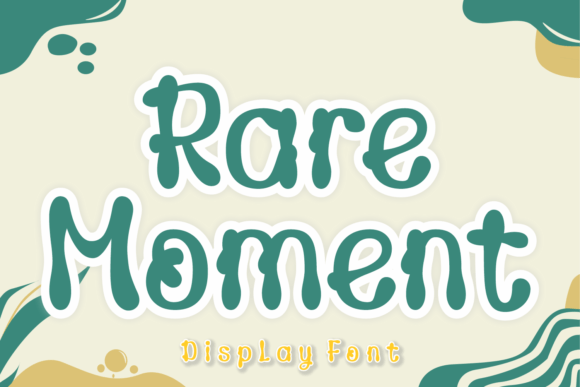
Rare Moment: A Display Font That Brings Personality to Your Projects
You know that feeling when you stumble across a design element that just clicks? It's not overly complex or trying too hard—it simply works, and suddenly your whole project feels more alive. That's the kind of reaction many designers and creators have when they discover a font like Rare Moment. This fun and quirky display font has a way of injecting energy and personality into creative work, making it a surprisingly versatile tool for everything from branding to social media graphics.
What Makes This Typeface Stand Out in a Crowded Market
Let's be honest: there are thousands of display fonts available today. So what makes one worth paying attention to? It often comes down to character—literally. Rare Moment strikes a balance between playful and polished. The letterforms have enough personality to catch the eye without crossing into territory that feels juvenile or hard to read. Think of it as the font equivalent of a well-chosen accessory: it adds flair without overwhelming the outfit.
For designers who work across multiple mediums, this kind of versatility matters. You want a typeface that can headline a poster, anchor a logo, and still look sharp on a website banner. The visual weight and stylistic details of Rare Moment make it suitable for projects where you need text to do more than just convey information—you need it to evoke a feeling.
Where This Font Truly Shines: Real-World Applications
One of the best ways to evaluate a creative font is to imagine it in action. Here are some practical scenarios where a typeface like this can make a meaningful difference:
- Logo Design and Brand Identity: If you're building a brand for a boutique business, a creative agency, or a lifestyle product, the right display font can become the cornerstone of your visual identity. Rare Moment's distinctive style helps businesses stand out in crowded markets where generic sans serif fonts blend into the background.
- Packaging Design: Shelf appeal matters. Whether you're designing labels for artisanal goods, cosmetics, or specialty foods, a font with personality helps communicate the brand's story before a customer even picks up the product.
- Social Media Graphics: In a sea of content, thumb-stopping visuals are essential. Using a bold, expressive typeface for Instagram posts, Pinterest pins, or Facebook ads can significantly boost engagement. The quirky charm of this font works particularly well for quotes, announcements, and promotional graphics.
- Event Invitations and Stationery: From wedding invitations to corporate event flyers, the font you choose sets the tone. A display font with character helps communicate whether an event is formal, casual, whimsical, or sophisticated.
- Website Headers and Blog Graphics: While body text should prioritize readability, headers and featured graphics are perfect places to showcase a font with more personality. Pairing a display font with a clean sans serif for body copy creates visual hierarchy and keeps readers engaged.
- Merchandise and Print Materials: T-shirts, tote bags, mugs, and posters all benefit from typography that feels intentional. A distinctive font can turn a simple design into something people actually want to buy.
Pairing Fonts Without the Headache
Here's something every designer learns eventually: a great font rarely works alone. Font pairing is where the real magic happens, and it's also where many projects go sideways. The key is contrast and complement. You want two typefaces that feel different enough to create visual interest but similar enough in tone to feel cohesive.
When working with a display font like Rare Moment, consider pairing it with a neutral sans serif or a classic serif for body text. The display font handles headlines, logos, and pull quotes, while the supporting typeface keeps longer passages readable. This approach works across editorial layouts, website design, and marketing materials.
A practical tip: always test your font pairings in context. Seeing two fonts side by side on a blank canvas is very different from seeing them in a real layout with images, spacing, and color. Mock up a few versions of your project before committing to a final combination.
Readability Is Not Optional
It's tempting to choose a font purely based on how cool it looks in a specimen sheet. But real-world use demands more than aesthetics. Readability—the ease with which someone can actually read your text—should always factor into your decision.
Display fonts are designed for larger sizes, so they're not meant for paragraphs of body copy. That's perfectly fine. Use them where they excel: headlines, titles, short phrases, and branding elements. For longer text, pair them with a font specifically designed for reading comfort. This isn't a limitation—it's how professional typography works.
Consider your audience, too. A younger demographic might respond well to bolder, more expressive typography. A professional audience might prefer something with personality but still restrained. The context of your project should guide your choices, not just personal preference.
Licensing and the Business Side of Fonts
If you're using a font for commercial purposes—which includes client work, products for sale, business branding, and monetized content—licensing matters. Always review the license that comes with any premium font. Most quality fonts come with clear terms outlining what's permitted, whether it's for personal use, commercial projects, or both.
Skipping this step is a common mistake, especially among small business owners and creators who are new to working with design assets. The last thing you want is a licensing issue down the road when your brand has grown and your designs are everywhere. Take five minutes to read the terms before you start using a new typeface in your work.
Making Typography Work for Your Brand
Typography is one of the most overlooked elements of brand identity, yet it's one of the most powerful. The fonts you choose communicate tone, values, and personality before a single word is read. A playful display font suggests creativity and approachability. A clean sans serif signals modernity and efficiency. A classic serif conveys tradition and trustworthiness.
When you find a font that aligns with your brand's personality—something like Rare Moment with its fun, distinctive character—make it a consistent part of your visual language. Use it across your logo, website headers, social media templates, and printed materials. Consistency builds recognition, and recognition builds trust.
The best design decisions are the ones that feel effortless to your audience. They don't think about why your brand looks polished and memorable—they just feel it. And often, it starts with something as simple as choosing the right typeface for the job.