Stickly: The Quirky Display Font with Big Personality
Ever stumbled across a typeface that just makes you smile? That's the kind of reaction Stickly tends to get. It's a display font with a distinct personality—playful, a little unconventional, but surprisingly versatile. In a world saturated with clean sans-serifs and elegant serifs, Stickly offers something different: a touch of whimsy that doesn't sacrifice professionalism. If you're a designer, entrepreneur, or creator looking to inject some character into your work, this might just be the creative asset you didn't know you needed.
Understanding Stickly's Visual Charm
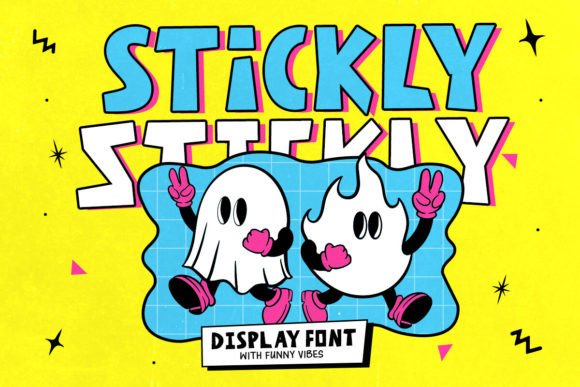
At its core, Stickly is a display typeface, meaning it's designed to grab attention rather than be used for long blocks of body text. Its letterforms have a quirky, slightly condensed structure with subtle irregularities that give it a handcrafted feel. Think of it as the typographic equivalent of a friendly wink—it's approachable and memorable. Unlike some overly stylized fonts that can feel gimmicky, Stickly strikes a balance. Its personality is strong enough to stand out, but its legibility remains solid, which is crucial for any design project.
What makes it visually appealing is its versatility across different contexts. It doesn't lean too heavily into any single aesthetic. It's not overly retro, not too futuristic, and not aggressively minimalist. This middle-ground quality allows it to adapt. You could pair it with a clean sans-serif for a modern brand identity, or use it alongside a handwritten script for a more artistic, creative project. It's this adaptability that makes it a practical choice for a wide range of applications.
Where Stickly Truly Shines: Practical Applications
So, where can you actually use a font like Stickly? The short answer is almost anywhere you need a headline or focal point with personality. Let's break down some real-world scenarios where its quirky character can be a major asset.
Branding and Logo Design: For startups, creative agencies, boutique shops, or artisan brands, Stickly can form the cornerstone of a distinctive logo. It immediately sets a tone that is creative, approachable, and confident. It works particularly well for businesses that want to stand out from corporate stiffness—think coffee roasters, indie bookstores, craft breweries, or design studios.
Packaging and Merchandise: On product packaging, Stickly can make a shelf presence pop. Imagine it on a label for organic granola, a craft soda bottle, or a box of handmade soaps. It communicates care and creativity. The same goes for merchandise like t-shirts, tote bags, and mugs, where a bold, readable display font is key.
Digital Presence: In the digital realm, Stickly is excellent for website hero sections, blog post titles, and social media graphics. It helps create a consistent visual language across your Instagram stories, Pinterest pins, and Facebook ads. For content creators and bloggers, using Stickly for featured images or quote graphics can make your content instantly more recognizable in a crowded feed.
Print and Editorial: Don't overlook print. Stickly can be a fantastic choice for poster headlines, event invitations, magazine spreads, or the cover of an indie zine. Its engaging letterforms draw the eye, making it ideal for any context where you need to communicate a key message quickly and stylishly.
Integrating Stickly into Your Design Workflow
Knowing where to use a font is one thing; knowing how to use it effectively is another. Here’s some practical advice for making the most of Stickly in your projects.
Consider the Context and Audience: Always start with your project's goals. Is the tone playful, sophisticated, edgy, or professional? Stickly leans playful and creative, so it's perfect for brands targeting a younger demographic or those in creative industries. For a law firm or a financial institution, it might not be the right fit. Matching typography to your audience's expectations is step one.
Master the Art of Font Pairing: Stickly is a star, but it needs a supporting cast. Because it's a display font, pairing it with a highly readable neutral font for body text is essential. A classic serif like Georgia or a clean sans-serif like Open Sans or Lato can provide a calm backdrop that lets Stickly's headlines shine. Experiment with pairings to see what creates the right visual harmony for your brand identity.
Test for Readability at Scale: Always test your chosen font at the sizes you'll actually use it. A headline that looks great at 72pt might become illegible at 24pt on a mobile screen. Check how Stickly renders in different environments—on a high-resolution screen, on a printed brochure, on a small social media thumbnail. Good design is functional, not just beautiful.
Explore the Included Styles: Many premium fonts come with stylistic alternates, ligatures, or different weight options. Check what's included in the Stickly package. These extra features can add another layer of customization, allowing you to tweak the font's personality to better suit a specific project—maybe by using a different "a" or "g" to refine the look.
Understand the License: If you're using Stickly for commercial work—a client project, a product you sell, or business marketing materials—ensure you have the correct commercial license. Respecting licensing terms is not only ethical but also protects you and your clients from legal issues down the line. It's a non-negotiable part of professional design work.
Beyond Aesthetics: The Strategic Value of a Distinct Font
Choosing a font like Stickly isn't just an aesthetic decision; it's a strategic one. In marketing and branding, consistency is everything. By selecting a distinctive typeface and using it consistently across all touchpoints, you build a visual shorthand for your brand. Over time, people will start to associate that specific typographic style with your business. That's powerful for brand recognition.
Furthermore, a well-chosen font enhances professionalism. It shows that you've paid attention to the details, which builds trust. A quirky yet legible font like Stickly can make your communications feel more human and relatable, fostering better audience engagement. It tells a story about your brand's personality before a single word of copy is read.
Ultimately, typography is a fundamental tool in visual communication. It has the power to set a mood, guide the viewer's eye, and reinforce a message. Stickly, with its unique blend of quirkiness and adaptability, offers a valuable tool for any creator's toolkit. It's not about following trends, but about finding a typeface that authentically represents the character of your project and connects with the people you're trying to reach. So, if your work could use a dose of friendly character, it might be worth giving Stickly a closer look.